
Finding a cluster of writhing maggots in your kitchen garbage can, outdoor trash bin, compost pile, or carpet is one of the most unsettling household discoveries. Beyond the immediate revulsion factor, these pests represent an active sanitary breakdown.
Maggots are the larval stage of common two-winged flies (Diptera), predominantly houseflies (Musca domestica), blowflies or bottle flies (Calliphoridae), and flesh flies (Sarcophagidae). Because female flies deposit hundreds of eggs at a time on decomposing organic matter, a small oversight—such as an unsealed bag of food scraps or a cracked trash can lid during warm weather—can escalate into a full-scale infestation within 24 to 48 hours.
This comprehensive guide details scientifically supported eradication methods, safe chemical and natural interventions, step-by-step cleaning protocols for specific household zones, and long-term prevention strategies grounded in Integrated Pest Management (IPM) principles.
The Biology and Life Cycle of Maggots: Why Infestations Escalate Rapidly
To permanently eliminate maggots, you must understand their developmental timeline. You are not dealing with an isolated organism; you are intervening in a rapid reproductive cycle.
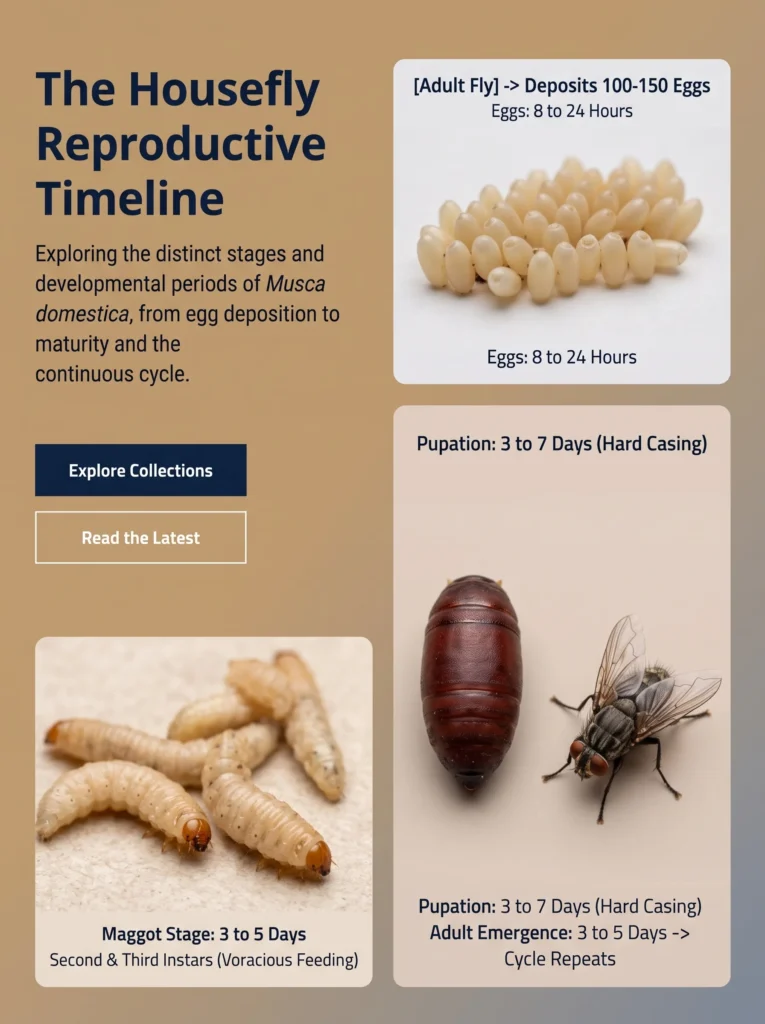
1. Egg Deposition and Hatching
An adult female fly searches for moist, decaying organic substrates rich in protein and carbohydrates. Preferred breeding grounds include rotting meat, decaying produce, animal feces, pet food dishes, compost piles, and grease-lined trash containers.
A single fly deposits clusters of 75 to 150 elongated, off-white eggs at a time, producing upwards of 500 to 1,000 eggs across its brief adult lifespan. In warm summer conditions (temperatures between 80°F and 90°F / 27°C and 32°C), these eggs can hatch in as little as 8 to 12 hours.
2. Larval Instars (The Maggot Phase)
Once hatched, the legless, cylindrical larvae feed continuously on surrounding decaying tissue and bacteria. Maggots progress through three distinct developmental stages, known as instars:
- First Instar: Translucent, microscopic larvae that immediately burrow into wet food sources.
- Second Instar: Rapidly growing off-white or yellowish larvae with visible mouth hooks used to tear food.
- Third Instar: Fully grown larvae measuring up to 0.75 inches (12 to 20 millimeters) in length. At this stage, they exhibit a blunt posterior end with dual breathing spiracles and a tapered anterior head.
This entire feeding phase typically lasts between 3 and 6 days in ambient summer temperatures.
3. Pupation and Metamorphosis
When third-instar maggots reach peak nutritional capacity, they enter the “wandering stage.” They deliberately crawl away from their moist feeding substrate in search of a cool, dry, dark crevice to pupate. Common pupation sites include underneath trash bags, beneath baseboards, inside carpet fibers, or under loose soil.
During pupation, the outer larval skin hardens into a smooth, oval, dark reddish-brown capsule called a puparium. Over the course of 3 to 7 days, the insect undergoes complete metamorphosis within this shell.
4. Adult Emergence and Population Explosion
The newly formed adult fly pushes open the end of the pupal case, crawls into the open air, inflates its wings, and reaches reproductive maturity within 24 to 48 hours. If left unchecked, a single unemptied trash can during mid-summer can produce hundreds of fertile adult flies every week.
Health Hazards and Pathogen Transmission Risks
While maggots do not possess stingers or venom, their close association with filth, rotting matter, and fecal waste makes them significant mechanical vectors for dangerous micro-organisms.
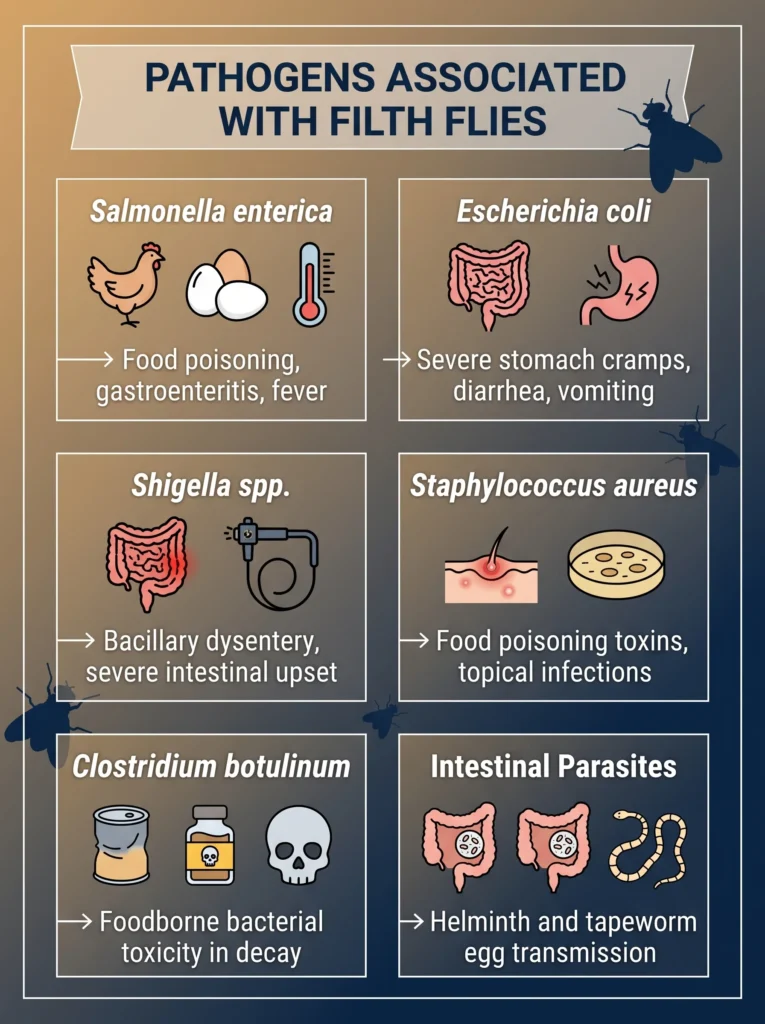
1. Bacterial Contamination
According to public health literature from the Centers for Disease Control and Prevention (CDC) and university agricultural extensions, filth flies and their larvae harbor hundreds of pathogenic species. As maggots churn through spoiled food and feces, their bodies become saturated with bacteria like Salmonella, E. coli, and Campylobacter. When larvae pupate and emerge as airborne adult flies, they transfer these bacteria directly onto clean dishes, kitchen countertops, open produce, and dining surfaces.
2. Accidental Myiasis
Myiasis is the parasitic infestation of live human or animal tissue by dipterous larvae. While the vast majority of maggots found in residential settings are saprophagous (consuming only dead, decomposing matter), certain species of blowflies and bottle flies can be attracted to open wounds, untreated skin infections, or soiled fur on elderly, immobile, or outdoor pets.
If you notice flies or maggots congregating around an animal’s skin, ears, or perineal region, seek immediate emergency veterinary intervention.
Natural and Non-Toxic Methods to Kill Maggots
For indoor kitchens, residential pantries, or homes with small children and pets, non-toxic and mechanical eradication methods provide effective knockdown without introducing hazardous synthetic chemical residues.
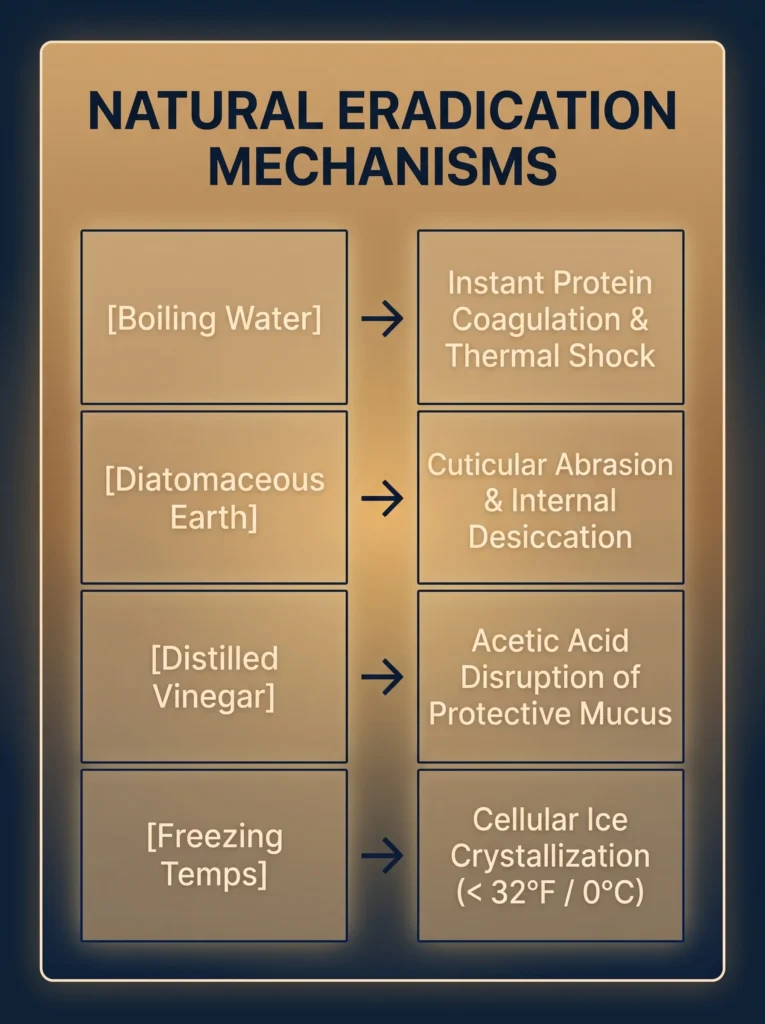
1. Boiling Water (Immediate Thermal Shock)
Boiling water is the fastest, cheapest, and most universally effective home remedy for killing maggots instantly.
- The Mechanism: Maggots are composed primarily of water and proteins. Exposure to temperatures exceeding 140°F (60°C)—and specifically boiling water at 212°F (100°C)—causes instantaneous protein denaturation and thermal shock, terminating the larvae within seconds.
- Application Technique: Bring a large kettle or stockpot of water to a rolling boil. Pour the boiling water directly over the infested area (such as the base of an outdoor trash bin or a tiled utility drain). Ensure the water penetrates all crevices where larvae may be hiding.
- Safety Precaution: Never pour boiling water over thin glass, fragile ceramic fixtures, or unsealed wood surfaces that could warp or crack under sudden thermal expansion.
2. Food-Grade Diatomaceous Earth (Mechanical Desiccation)
Food-Grade Diatomaceous Earth (DE) is an all-natural powder composed of fossilized microscopic aquatic organisms called diatoms. It is non-toxic to mammals but lethal to soft-bodied invertebrates.
- The Mechanism: To human touch, DE feels like soft baby powder. Under microscopic inspection, however, the silica particles resemble shards of broken glass. When maggots crawl over DE, the sharp particles lacerate the thin protective, waxy lipid layer on their cuticle. The silica then rapidly absorbs moisture and body fluids, causing the larvae to die of severe dehydration within several hours.
- Application Technique: Liberally dust food-grade DE over dry surfaces where maggots are crawling, along the base of trash cans, under kitchen cabinets, or along garage baseboards.
- Important Note: DE is only effective when completely dry. If the powder becomes wet from trash juices or water, its absorbent qualities are neutralized until it dries out completely. Wear a simple dust mask during application to avoid inhaling airborne fine silica particles.
3. White Distilled Vinegar Solution
White vinegar contains roughly 5% to 8% acetic acid, which serves as a natural sanitizing agent, deodorizer, and contact irritant for insect larvae.
- Application Recipe: Mix a 1:1 ratio of distilled white vinegar and warm water (or use straight undiluted vinegar for severe infestations). Add 1 to 2 tablespoons of liquid dish soap per quart of liquid. The dish soap acts as a surfactant, reducing water surface tension so the acidic solution adheres directly to the maggots rather than beading off their waxy skin.
- Benefits: Beyond killing exposed larvae, vinegar effectively dissolves the pheromones and acidic grease films that attract new adult flies to the area.
4. Freezing Temperatures (Cold Inactivation)
Maggots thrive in warm environments and possess limited resistance to freezing conditions. If small household items (such as a sealed indoor compost caddy, vacuum canister contents, or pet dishes) become infested, placing the sealed container into a freezer set below 32°F (0°C) for a minimum of 24 to 48 hours will freeze the larvae, preventing pupation.
Chemical and Commercial Treatment Options
When infestations occur in large outdoor dumpsters, garages, or structural voids, commercial-grade household cleaners and pesticides provide heavy-duty knockdown power and residual protection.
| Chemical Agent / Category | Active Ingredient | Application Best For | Safety Precautions |
| Household Chlorine Bleach | Sodium Hypochlorite (~5-8%) | Outdoor trash cans, plastic bins, concrete pads | Never mix with ammonia or acids; use in open-air ventilation; wear eye protection |
| Contact Insecticide Aerosol | Pyrethrins / Tetramethrin | Flying adult flies, indoor structural cracks | Keep children/pets away until mist settles; avoid food prep surfaces |
| Residual Liquid Concentrate | Permethrin / Bifenthrin | Outdoor perimeter barriers, garage walls | Apply on calm days to prevent drift; keep off runoff drains |
| Insect Growth Regulator (IGR) | Pyriproxyfen / Novaluron | Long-term control, breaking reproductive cycle | Prevents pupae from maturing into adults; mix strictly to label specs |
1. Household Chlorine Bleach (Sodium Hypochlorite)
Bleach is an exceptionally powerful disinfectant and chemical oxidizer capable of eradicating maggots, fly eggs, and odor-causing bacteria simultaneously.
- Application Protocol: In a well-ventilated outdoor setting, prepare a solution of 1 cup of standard household bleach per 1 gallon of cool or lukewarm water. Pour or spray the solution across the contaminated surface, ensuring thorough coverage of all corners and lid hinges. Allow the solution to maintain contact for at least 10 to 15 minutes before scrubbing with a stiff-bristled utility brush and rinsing thoroughly with clean water.
- Critical Chemical Safety Warning: NEVER mix chlorine bleach with ammonia, vinegar, toilet bowl cleaners, or other acidic agents. Combining sodium hypochlorite with ammonia or acids produces toxic chloramine or chlorine gases, which cause immediate respiratory distress, chemical burns, and severe lung damage. Always perform bleach sanitization outdoors or in spaces with unrestricted airflow while wearing heavy rubber gloves and protective eyewear.
2. Pyrethrin-Based Contact Sprays
Botanical pyrethrins (derived from chrysanthemum flowers) and synthetic pyrethroids (such as permethrin and cypermethrin) target the central nervous systems of insects. A quick-knockdown aerosol spray labeled for flies and crawling insects will neutralize maggots within minutes of direct contact. These are particularly useful for treating high-reach garage ceilings, unsealed window sills, and tight crevices behind appliances.
3. Insect Growth Regulators (IGRs)
Professional pest control technicians utilize Insect Growth Regulators to achieve comprehensive, long-term vector control. As detailed by pest management specialists at Solutions Pest & Lawn, pairing a contact insecticide with an IGR (such as Martin’s I.G. Regulator or Archer) prevents immature fly larvae from completing metamorphosis into reproductive adult flies.
When applied using a low-pressure hand-pump sprayer along outdoor trash pads, landscape beds, and resting zones around doors and windows, this combined barrier breaks the breeding cycle for up to six months.
Step-by-Step Remediation: How to Eradicate Maggots in Specific Locations
Different zones of a home present unique environmental variables. Follow these tailored protocols to clean and restore specific infested areas.
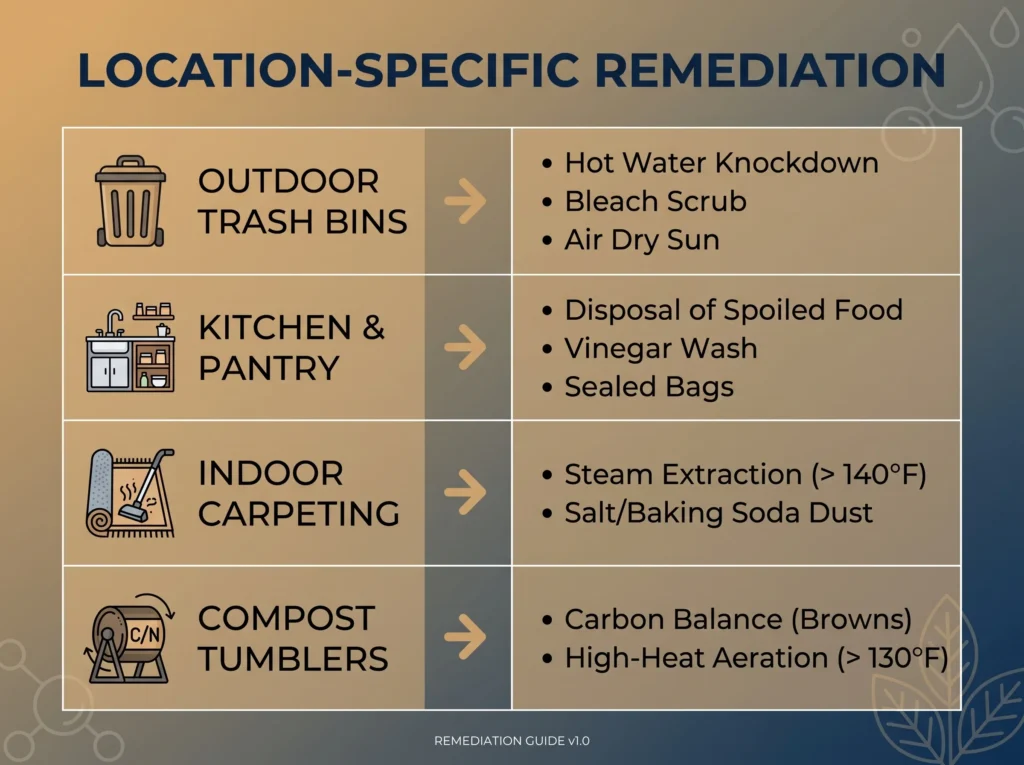
1. Outdoor Trash Cans and Wheelie Bins
Outdoor garbage receptacles are the most frequent site of maggot outbreaks due to ambient heat, leaking refuse juices, and easy fly access.
1.Empty and Remove All Solid Refuse:Perform this step immediately after municipal trash collection.
Wait until your local waste collection truck has emptied the bin, or double-bag all remaining trash in heavy-duty commercial contractor bags, tie them securely, and place them in a temporary holding container.
2.Execute Instant Larval Knockdown:Use thermal shock or chemical spray.
Pour a large bucket of boiling water directly into the base of the bin, or apply a generous layer of diluted bleach solution (1 cup bleach per gallon of water) across the entire interior, making sure to coat all crawling larvae and unhatched egg clusters.
3.Scrub and Degrease Interior Surfaces:Remove biofilm and stuck organic waste.
Add warm water and several squirts of grease-cutting liquid dish detergent. Using a long-handled deck brush or stiff broom, scrub the interior walls, bottom corners, drainage plugs, and inner lid hinges to loosen baked-on grease, organic matter, and pupal casings.
4.Rinse and Evacuate Wash Water Safely:Comply with local environmental runoff regulations.
Tip the trash can over and rinse it thoroughly using a high-pressure hose nozzle. Direct wash water onto gravel or an area that does not flow into municipal storm drains.
5.Solar Dry and Apply Preventative Barrier:UV light naturally sanitizes remaining surfaces.
Leave the bin open upside down or tilted in direct, bright sunlight until completely dry. Moisture attracts flies; drying starves them. Once dry, sprinkle a half-cup of baking soda or food-grade diatomaceous earth into the bottom before inserting a new heavy-duty trash bag.
2. Kitchens, Sinks, and Garbage Disposals
When maggots appear inside the home, the source is almost always an unsealed trash bin, overripe fruit bowl, pet bowl, or a dirty kitchen garbage disposal drain.
- Step 1: Locate and Eliminate the Breeding Source: Inspect under sinks, inside pantries, behind the refrigerator, and at the bottom of the kitchen waste can. Throw away all rotting fruit, vegetables, spoiled meat, and damp cardboard. Double-bag the waste and immediately take it outdoors.
- Step 2: Clean the Trash Can: Take the indoor plastic bin outside or into a bathtub. Wash it thoroughly with a 1:1 solution of white vinegar and warm water mixed with dish soap. Dry it completely before returning it to the kitchen.
- Step 3: Treat the Garbage Disposal and Sink Drains: Decomposing food waste can coat the interior baffles and splash guards of a garbage disposal, creating an invisible fly hatchery.
- Pour 1/2 cup of baking soda directly down the disposal drain.
- Follow immediately with 1 cup of distilled white vinegar. Allow the bubbling effervescence to sit for 15 to 20 minutes to break down organic grease films.
- Flush the drain with a full kettle of boiling water while running the disposal for 30 seconds with cold tap water.
3. Carpets, Rugs, and Upholstery
If a trash bag leaks onto a carpet or an animal brings a dead rodent or bird indoors, maggots will hatch and rapidly crawl deep into the carpet pile to seek shelter.
Physical Removal and Vacuuming: Manually sweep visible larvae using a broom and dustpan. If using a vacuum cleaner, immediately remove the vacuum bag or empty the dirt canister into a plastic grocery bag, seal it tightly, and discard it in an outdoor bin.
Apply a Dehydrating Powder Blend: Mix equal parts table salt and baking soda. Dust this blend generously over the affected carpet area and let it sit for 2 to 4 hours. The salt and baking soda desiccate tiny larvae and neutralize lingering organic acids.
Hot-Water Steam Extraction: Rent or use a professional-grade carpet steam cleaner capable of heating water above 140°F (60°C). Steam extraction penetrates the deepest layers of the carpet backing, eliminating unhatched fly eggs, hidden pupae, and residual bacteria on contact.
Enzymatic Treatment: Spray the area with a bio-enzymatic pet odor and stain remover to digest any remaining proteins and fats that could attract future flies.
4. Compost Bins and Tumblers
Composting requires a careful balance of organic materials. If a compost pile develops an overwhelming maggot population, it typically indicates an overabundance of nitrogen-rich “greens” or the improper inclusion of animal proteins.
- Identify Black Soldier Fly Larvae (BSFL): In outdoor compost piles, you may encounter large, segmented, brownish-gray grubs. These are often the larvae of the Black Soldier Fly (Hermetia illucens). Unlike housefly maggots, BSFL are harmless, non-biting, do not carry human diseases, and are exceptionally efficient at breaking down compost. If you do not mind their presence, they can be left to aerate and digest the compost.
- To Eradicate Maggots in Compost:
- Restore the Carbon-to-Nitrogen Balance: Immediately add dry “browns”—such as dry leaves, shredded cardboard, sawdust, or straw—to absorb excess moisture.
- Bury Kitchen Scraps: Always bury fresh food scraps at least 4 to 6 inches deep into the center of the pile; never leave fresh fruit or vegetable matter exposed on the surface.
- Aerate and Heat the Pile: Turn the compost frequently with a pitchfork to increase airflow and accelerate microbial decomposition, elevating the core temperature to between 130°F and 150°F (55°C and 65°C), which kills fly larvae and weed seeds naturally.
- Exclude Prohibited Materials: Never add meat scraps, animal bones, dairy products, grease, or pet feces to an open backyard compost bin.
Long-Term Maggot Prevention and Vector Management
Eradicating an existing infestation is only half the battle; preventing adult flies from accessing breeding grounds ensures your home remains pest-free throughout the warmer months.
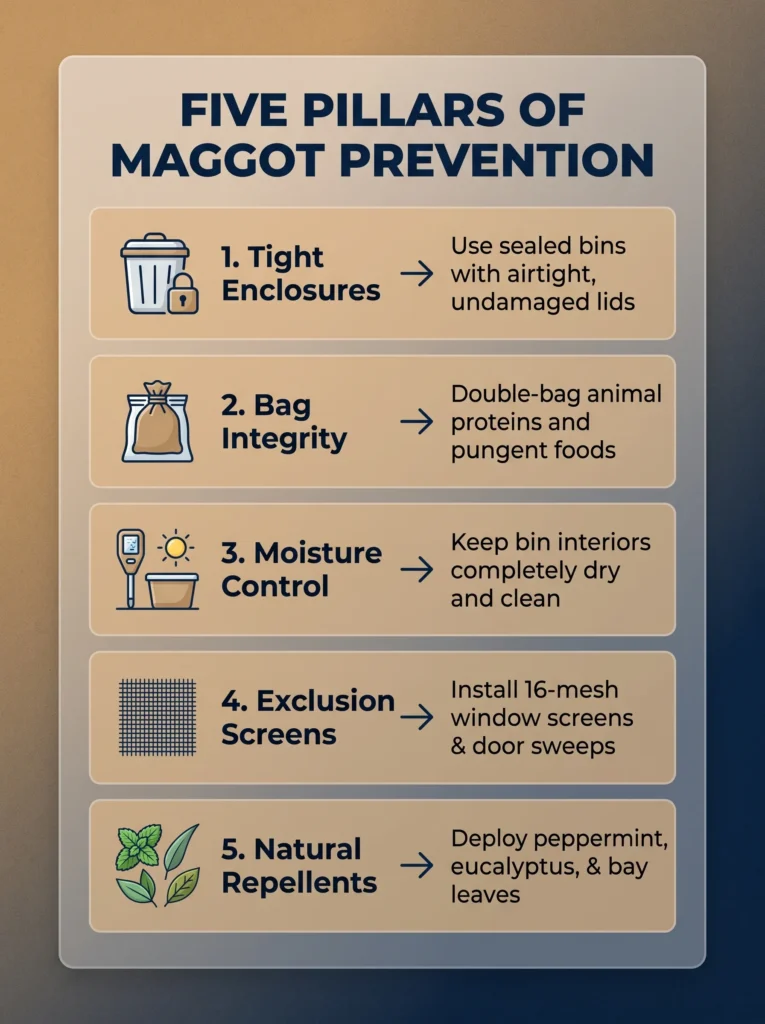
1. Maintain Total Barrier Integrity
Adult flies cannot lay eggs if they cannot physically contact rotting substrate.
- Inspect Bin Lids: Check outdoor trash and recycling bins for cracked lids, missing drain plugs, or warped edges. If your municipality provides damaged trash carts, request a replacement container.
- Seal Food Scraps: Always tie kitchen trash bags tightly before taking them outside. For high-risk items like raw chicken trimmings, fish skins, or melon rinds, wrap them in a separate plastic grocery bag or newspaper before placing them in the main trash.
2. Control Temperature and Sun Exposure
Heat accelerates decomposition and amplifies the sulfurous odors that attract adult flies from hundreds of yards away.
- Store outdoor trash cans in a shaded area of your property or inside a well-ventilated garage until collection day, rather than in direct, baking sunlight.
- Hose down your trash bins with a light disinfectant spray once or twice a month to prevent sludge buildup.
3. Implement Natural Botanical Deterrents
Flies possess acute olfactory sensors on their antennae and tarsi (feet). Certain botanical essential oils act as powerful natural repellents:
- Peppermint, Eucalyptus, and Lemongrass Oil: Dilute 20 drops of pure essential oil with water and a drop of dish soap in a spray bottle. Mist the rims and handles of your trash cans weekly.
- Bay Leaves: Place whole dried bay leaves inside kitchen pantry corners and under trash can liners; the natural eucalyptol compound helps deter flies, weevils, and beetles.
Conclusion
Eradicating a maggot infestation requires immediate action paired with consistent, long-term sanitation. For fast knockdown, boiling water provides instant thermal shock, while diluted bleach, vinegar-soap mixtures, and food-grade diatomaceous earth deliver effective surface disinfection and mechanical control across garbage bins, indoor drains, and carpets. Ultimately, breaking the reproductive cycle of filth flies comes down to prevention: double-bagging protein-rich food waste, keeping trash receptacles tightly sealed and out of direct sunlight, managing compost ratios, and regularly sanitizing high-risk areas. By addressing both the active larvae and the environmental conditions that attract adult flies, you can maintain a clean, pest-free home year-round.
Frequently Asked Questions
How long does it take for maggots to turn into flies?
In warm summer temperatures (80°F to 90°F / 27°C to 32°C), maggots feed for approximately 3 to 6 days before seeking a dry crevice to pupate. The pupal stage lasts another 3 to 7 days, meaning a maggot can transform into a fully functional adult fly in as few as 7 to 10 days from the initial egg deposition.
Can maggots survive being flushed down a toilet or drain?
Maggots are resilient and can survive for extended periods submerged in cool water because their spiracles can trap tiny air bubbles. Flushing them down a toilet often only transports them into your plumbing lines where they may crawl back up through overflow channels or traps. To kill them in drains, always use boiling water or a baking soda and vinegar flush followed by hot water.
What smell repels flies and maggots permanently?
Flies are strongly repelled by strong essential oils containing menthol, eucalyptol, citronellol, and geraniol. Regularly spraying trash storage areas with solutions of peppermint oil, eucalyptus oil, lavender oil, or crushed bay leaves masks the scent of food decay and deters female flies from landing.
Will bleach kill maggots immediately?
Concentrated household bleach (sodium hypochlorite) will kill maggots, but it is not instantaneous; it typically takes several minutes of direct exposure to break down their cuticular surface. Boiling water is much faster for immediate on-contact knockdown, while bleach provides superior subsequent surface disinfection and odor neutralization.
Are maggots dangerous to human health?
Maggots themselves do not bite or sting humans. However, they carry and transmit dangerous filth-borne bacteria—including Salmonella, E. coli, and Shigella—derived from the rotting matter they feed upon. Always wear protective rubber gloves when cleaning an infested area, and thoroughly sanitize all affected surfaces afterward.
Pingback: Cherry Blossom Trees Growing Guide: Planting & Care Tips