
Growing a cherry blossom tree can transform a yard with delicate spring flowers, attractive foliage, and an elegant natural shape. This cherry blossom trees growing guide explains how to choose, plant, water, fertilize, prune, and maintain these beautiful ornamental trees. With the right location and basic care, cherry blossom trees can become long-lasting landscape features that return with impressive blooms each spring.
What Are Cherry Blossom Trees?
Cherry blossom trees are flowering trees in the Prunus genus that are primarily grown for their beautiful spring blossoms. Unlike fruiting cherry trees, many ornamental varieties are selected mainly for their flowers, form, and seasonal appearance rather than edible fruit. Popular types include Japanese flowering cherries such as ‘Kanzan’ and weeping forms that create a distinctive cascading appearance.
Flowering cherries vary considerably in mature size, shape, flower color, and bloom time. Some produce white flowers, while others have pale pink, deep pink, or double blossoms. The United States National Arboretum notes that flowering cherries generally perform best in full sun, well-drained soil, and adequately moist conditions.
Choosing the Right Cherry Blossom Tree
The first step in this cherry blossom trees growing guide is choosing a variety that suits your garden. Consider the mature height and width of the tree, the amount of sunlight available, your soil conditions, and the climate in your area. A tree that looks perfect at the nursery can eventually become too large if there is not enough room for its mature canopy.
Popular Cherry Blossom Varieties
Some commonly grown ornamental cherry varieties include:
- Kwanzan cherry: Known for abundant double pink flowers and an upright, spreading form.
- Yoshino cherry: Produces attractive pale pink to white flowers and develops a broad canopy.
- Weeping cherry: Has gracefully cascading branches and works well as a focal point.
- Higan cherry: Available in several forms and valued for its attractive spring flowers.
- Okame cherry: Produces pink blossoms and is often selected for its attractive flowering display.
The best choice depends on your growing conditions rather than appearance alone. University of Maryland Extension recommends considering mature size, sunlight, soil drainage, and air circulation when selecting an ornamental cherry.
Where Should You Plant a Cherry Blossom Tree?
Location is one of the most important factors in this cherry blossom trees growing guide. Choose a position that receives plenty of direct sunlight and has soil that drains efficiently after rainfall. Most ornamental cherries perform well with around 6 to 8 hours of sunlight per day.
Avoid planting the tree in a permanently wet area or a low location where water collects. Poor drainage can keep roots saturated and increase the risk of root-related problems. Also consider nearby buildings, fences, power lines, sidewalks, and other trees because the young plant will eventually develop a much larger canopy.
Best Soil for Cherry Blossom Trees
Cherry blossom trees prefer fertile, well-drained soil rather than heavy, permanently wet ground. Ornamental cherries can generally perform well in soils with a pH around 6.0 to 7.5, according to University of Maryland Extension.
Before planting, examine your soil carefully. If it remains wet for long periods after rain, improving drainage or selecting another location may be more effective than simply adding fertilizer. A soil test can also help identify nutrient deficiencies and determine whether the soil pH needs adjustment.
How to Get Rid of Maggots: Complete Elimination and Prevention Guide
When Is the Best Time to Plant?
Timing depends partly on your local climate, but early spring is often a reliable planting period once the ground can be worked and the greatest frost danger has passed. Some regions also allow planting in fall, particularly when the tree has entered dormancy and conditions are suitable.
This cherry blossom trees growing guide recommends checking local nursery or extension guidance because planting windows differ according to climate. University extension recommendations commonly emphasize spring planting for young cherry trees, while some regions also consider fall planting appropriate.
Avoid planting when the ground is frozen, extremely wet, or unusually hot. Newly planted trees need time to establish roots, so moderate conditions are generally easier on the plant.
How to Plant a Cherry Blossom Tree
Planting correctly gives your tree a strong foundation for future growth. Start by digging a hole that is wide enough for the entire root system without forcing roots to bend or circle tightly.
Follow These Planting Steps
- Choose the location: Select a sunny site with good drainage.
- Prepare the hole: Make the hole wide enough for the roots to spread naturally.
- Inspect the roots: Remove damaged or broken portions if necessary.
- Position the tree: Place it at approximately the same depth at which it was growing in the nursery.
- Spread the roots: Allow them to extend naturally rather than bending them sharply.
- Backfill the hole: Use the excavated soil and gently settle it around the roots.
- Water thoroughly: Give the newly planted tree a deep watering.
- Add mulch: Apply a moderate layer around the root zone while keeping it away from the trunk.
Purdue Extension similarly recommends keeping roots moist before planting, avoiding cramped roots, planting at the nursery depth, and watering thoroughly after the hole is filled.
How Much Sunlight Do Cherry Blossom Trees Need?
Sunlight is essential for healthy growth and abundant flowering. Most ornamental cherry trees should receive approximately 6 to 8 hours of direct sunlight each day.
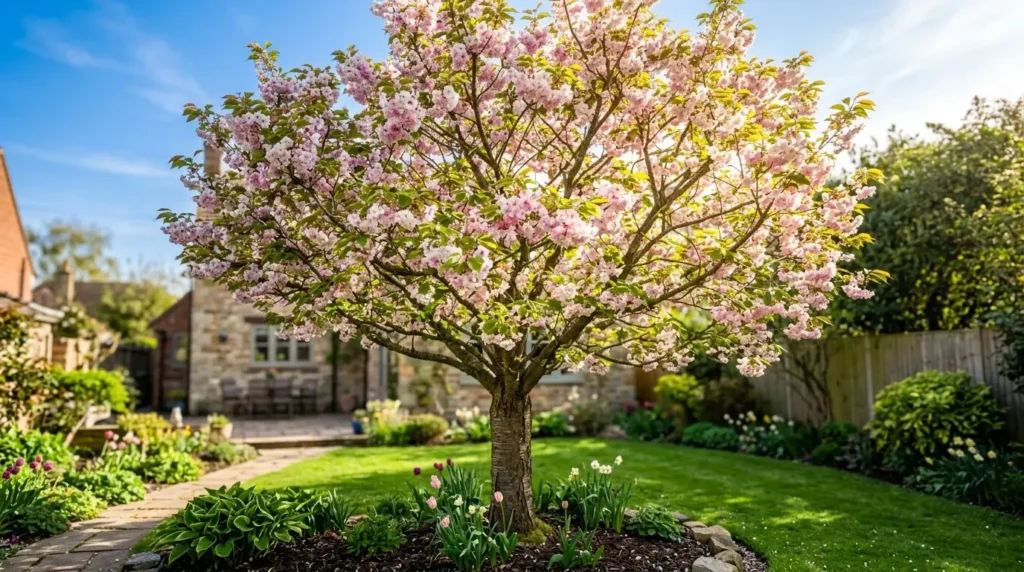
A shaded location may allow a tree to survive, but limited light can result in weaker growth and fewer flowers. When planning this cherry blossom trees growing guide, remember that sunlight patterns can change as nearby trees grow, so consider the future environment rather than only the current conditions.
Watering Cherry Blossom Trees
Watering requirements are especially important during the establishment period. Newly planted trees have relatively small root systems and may need regular moisture during dry weather, while established trees generally become less dependent on supplemental watering.
A useful general guideline for cherry trees is about 1 inch of water per week from rainfall or irrigation during the growing season, although actual requirements depend on soil, climate, tree age, and weather. Iowa State University Extension recommends giving young trees more frequent attention and avoiding saturated soil.
Instead of giving the tree frequent shallow watering, apply water deeply enough to moisten the root zone. Check the soil before watering again, particularly if the weather has recently been rainy.
Mulching Around the Tree
Mulch can help conserve soil moisture and reduce competition from weeds. Spread organic mulch over the root area, but avoid piling it directly against the trunk.
A mulch layer of about 2 to 3 inches is generally sufficient for ornamental cherries. University of Maryland Extension specifically recommends keeping mulch several inches away from the trunk to reduce the risk of trunk and pest problems.
Good mulch choices include shredded bark, wood chips, or other suitable organic materials. As the mulch decomposes, it can also contribute organic matter to the soil.
Fertilizing Cherry Blossom Trees
Fertilizer should not automatically be applied simply because a tree has been planted. Excessive fertilizer, particularly nitrogen, can encourage excessive leafy growth rather than producing the balanced growth and flowering you want.
The better approach is to test the soil and fertilize when a deficiency is identified. Iowa State University Extension notes that modest fertilization may support growth, while excessive nitrogen can encourage excessive vegetative growth and reduce winter hardiness.
If fertilizer is necessary, follow the product directions and recommendations from a soil test or local horticultural authority. More fertilizer does not necessarily mean more flowers.
Pruning Cherry Blossom Trees
Pruning helps maintain the tree’s structure, remove damaged wood, and improve airflow through the canopy. However, ornamental cherry trees should not be aggressively pruned without a clear reason.
Remove dead, broken, diseased, or crossing branches when appropriate. Young trees may also need structural training so that strong branches develop as the canopy matures.
In this cherry blossom trees growing guide, pruning should be viewed as maintenance rather than a yearly opportunity to dramatically reshape the tree. Poor pruning can create unnecessary wounds and negatively affect the tree’s natural form.
How to Encourage More Blooms
If your main reason for growing the tree is its flowers, focus on overall plant health rather than trying to force flowering with excessive fertilizer. Adequate sunlight, proper moisture, suitable soil, and appropriate pruning all contribute to a healthier flowering tree.
Avoid planting the tree where it must compete heavily with larger trees for sunlight, water, and nutrients. Maintaining good air circulation around the canopy is also helpful because crowded, humid conditions can encourage foliar diseases.
Common Pests and Diseases
Cherry blossom trees can experience insect and disease problems, particularly when they are stressed by drought, poor drainage, physical injury, or unsuitable growing conditions. Potential problems vary according to the tree variety and region.
Watch for symptoms such as:
- Discolored or spotted leaves
- Premature leaf drop
- Dieback of branches
- Holes in leaves
- Sticky sap or gumming
- Cankers or damaged bark
- Unusual growths on branches
- Wilting despite adequate moisture
Regularly inspecting the tree makes it easier to notice problems before they become severe. University of Maryland Extension lists drought, compacted or poorly drained soil, physical damage, and winter injury among stress factors that can increase pest and disease problems.
How to Care for a Cherry Blossom Tree in Different Seasons
A seasonal routine makes this cherry blossom trees growing guide easier to follow throughout the year.
Spring
Spring is the main flowering season, so inspect the tree as new growth develops. Keep newly planted trees adequately watered during dry periods and watch for early signs of pests or leaf diseases.
Summer
During summer, pay close attention to soil moisture, particularly during extended dry weather. Young trees generally need more supplemental water than established trees. Keep competing weeds away from the root zone and maintain an appropriate mulch layer.
Fall
Fall is a good time to inspect the tree’s overall structure and clean up fallen diseased plant material where appropriate. In areas where fall planting is recommended, this can also be a suitable period to establish a new tree.
Winter
Winter care depends on your local climate and the variety you grow. Protect young trees from physical damage and severe conditions where necessary, while avoiding unnecessary pruning during periods when your local extension service recommends against it.
How Fast Do Cherry Blossom Trees Grow?
Growth rate varies considerably depending on the species, cultivar, rootstock, soil, climate, water availability, and general care. A young tree typically spends considerable energy establishing its root system before reaching its mature appearance.
Do not judge the health of a newly planted tree solely by how quickly its branches grow. Strong root development and gradual canopy establishment are important during the early years.
Can Cherry Blossom Trees Grow in Containers?
Some smaller or dwarf ornamental cherry varieties may be grown in large containers, although container growing requires more attention than planting directly in the ground. The container needs sufficient room for root development and must have effective drainage.
Container trees also dry out faster than trees growing in the ground. They therefore require closer monitoring of moisture, especially during warm or windy weather. The Royal Horticultural Society notes that cherry trees grown in containers require regular attention and additional watering during dry periods.
Common Mistakes to Avoid
A successful cherry blossom trees growing guide should also explain what not to do. Avoid these common mistakes:
- Planting in permanently waterlogged soil
- Choosing a location with too little sunlight
- Planting too deeply
- Overwatering the root zone
- Applying excessive nitrogen fertilizer
- Piling mulch against the trunk
- Ignoring the tree’s mature size
- Crowding the tree with other plants
- Pruning excessively
- Ignoring early signs of pests or disease
Most of these mistakes can be prevented through careful planning before the tree is planted.
Frequently Asked Questions
How much sun does a cherry blossom tree need?
Most ornamental cherry trees perform best with approximately 6 to 8 hours of sunlight each day. A sunny location generally supports healthier growth and better flowering than a heavily shaded position.
How often should I water a cherry blossom tree?
Young trees need more frequent watering while their roots establish, especially during dry periods. Established trees generally require less supplemental water, but extended drought can still require irrigation. Avoid keeping the soil constantly saturated.
What type of soil is best for cherry blossom trees?
Cherry blossom trees generally prefer fertile, well-drained soil. Ornamental cherries can grow well in soil with a pH around 6.0 to 7.5, although the ideal range can vary somewhat by variety and local conditions.
Should cherry blossom trees be fertilized?
Fertilization is not always necessary. A soil test is a better starting point because it can identify nutrient deficiencies and guide appropriate fertilizer use. Excess fertilizer, particularly nitrogen, can produce excessive vegetative growth.
Can I grow a cherry blossom tree in a small yard?
Yes, but choose the variety carefully. Some flowering cherries become broad and large, while dwarf or more compact forms can be better suited to restricted spaces. Always check the expected mature height and spread before planting.
Why is my cherry blossom tree not flowering?
Insufficient sunlight, tree age, stress, unsuitable growing conditions, excessive vegetative growth, or normal variation between cultivars can all influence flowering. Start by checking the tree’s sunlight, moisture, soil conditions, and general health before making major changes.
Final Thoughts
Growing a beautiful flowering cherry tree starts with choosing the right variety and planting it in an appropriate location. Full sunlight, good drainage, adequate moisture, sensible fertilization, and careful pruning provide the foundation for healthy development.
The most important lesson from this cherry blossom trees growing guide is that consistent basic care is usually more valuable than complicated treatments. Give the tree enough space, protect its roots from excessive moisture and drought, monitor it regularly, and allow it time to establish. With the right conditions, a cherry blossom tree can become one of the most attractive seasonal features in a home landscape.