
Beadboard vs board and batten are two popular styles of interior wall paneling. Beadboard uses narrow, grooved panels to create a cozy, cottage or coastal feel. Board and batten features wider vertical boards with trim strips (battens) that yield a modern farmhouse or craftsman look. Both add architectural interest and protect walls, but they differ in cost, labor, and style.
Beadboard typically costs less per square foot ($0.50–$3 material), suits smaller rooms (kitchens, baths, mudrooms), and is easier to install in prefabricated sheets. Board and batten costs more ($1–$4 material), involves more carpentry (cutting and spacing battens), and works well in larger spaces or as an accent for a bold, vertical look. This guide compares their pros, cons, installation, costs, maintenance, style, and helps you decide which fits your home best.
Introduction
Choosing between beadboard vs board and batten paneling can be confusing. Both are forms of wainscoting (decorative wall panels), but they create very different looks and have different installation requirements. Beadboard is defined by narrow vertical planks with rounded grooves (“beads”) every 1–2 inches, giving walls a cottage or coastal charm. Board and batten uses wider boards with vertical “batten” strips over the joints, lending a stronger, farmhouse or craftsman style. Your choice will depend on your design goals, budget, room use, and DIY skill level.
Key differences:
- Look: Beadboard panels are slender and textured, ideal for casual or traditional decor. Board and batten has bold vertical lines and can cover full walls for a dramatic effect.
- Cost: Both can be done DIY or with a contractor. Material costs are roughly beadboard $0.50–$3 vs board & batten $1–$4 per sq ft (material only). Full installation (panels, labor, finish) runs about $10–$20 per sq ft for beadboard and $10–$23 per sq ft for board and batten.
- Installation: Beadboard is often installed as large tongue-and-groove panels, making it faster for DIYers. Board and batten usually requires cutting and attaching multiple strips and baseboards, which is more time-consuming.
- Best rooms: Beadboard “shines” in bathrooms, kitchens, laundry rooms, and mudrooms. Board and batten works well for living rooms, dining rooms, bedrooms, and accent walls in hallways or stairwells.
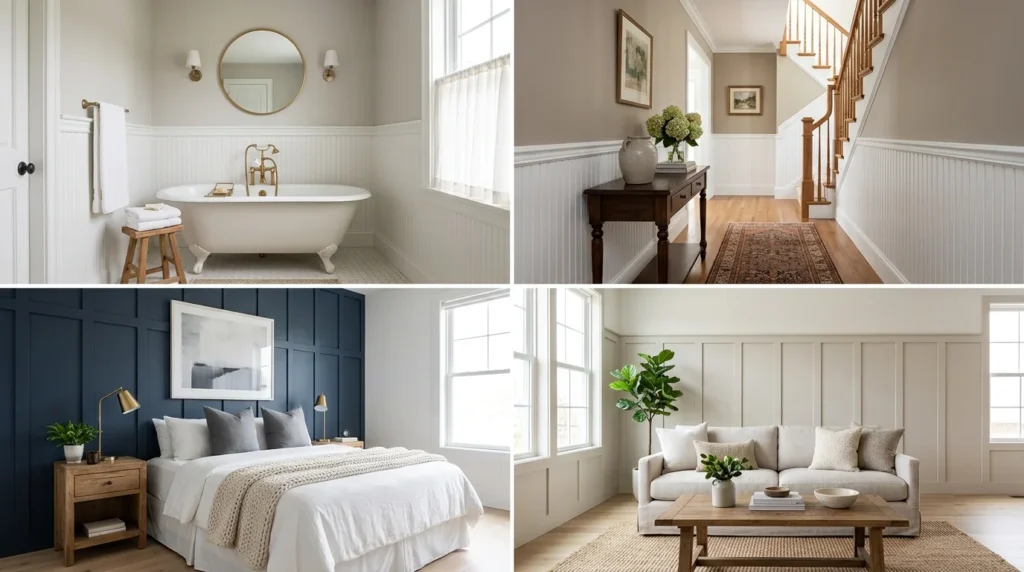
The decision hinges on style preference, room function, and budget. Below we detail each option’s of beadboard vs board and batten pros/cons, maintenance tips, suitable spaces, and other factors to help you make an informed choice.
Beadboard
What is beadboard? Beadboard is paneling with long vertical boards and evenly spaced narrow grooves (beads). It can come as individual boards (3–4 inches wide) or as large 4×8-foot panels with the pattern molded into them.
Pros:
- Classic look: Beadboard has a timeless, cottage/farmhouse feel and adds vintage charm. It’s especially popular in kitchens, bathrooms, mudrooms and breakfast nooks.
- Perceived height: The vertical lines can make a room feel taller and cozier.
- Ease of installation (DIY): Prefabricated beadboard panels simply glue or nail to the wall and interlock via tongue-and-groove. Many DIYers find it straightforward.
- Cost-effective materials: Sheets or boards of beadboard are relatively inexpensive (as low as ~$1 per sq ft), especially in MDF or PVC.
- Low maintenance surface: A painted or primed smooth beadboard can be wiped clean easily, and narrow grooves hide minor scuffs well.
Cons:
- Limited drama: Beadboard has a repetitive pattern that some find too casual or busy for large, formal spaces. It generally covers only the lower wall (wainscoting) or is used on one accent wall.
- Susceptible to moisture (depending on material): Standard MDF or wood beadboard can swell in very damp environments unless you choose moisture-resistant PVC or properly sealed wood.
- Panel seams (if sheet): Large panel sections may show seams that require careful finishing if not using tongue-and-groove boards.
- Labor: While DIY-friendly, the task still involves measuring, cutting, nailing, and caulking. Even “simple” beadboard can eat up a weekend.
Board and Batten
What is board and batten? Board and batten involves attaching wide vertical boards (the “board”) to the wall, and then covering the gaps between them with narrow vertical trim strips (the “battens”). The battens are usually 1–3 inches wide and spaced 6–10 inches apart.
Pros:
- Modern, dramatic look: Board and batten creates a bold linear texture. It works well on full walls or as a floor-to-ceiling panel to create a statement, adding architectural interest to any room.
- Versatility: This style can suit many aesthetics—from farmhouse and craftsman to contemporary. It can be painted any color, even with contrasting walls above a chair rail.
- Durability: Often built with solid wood or thick MDF, board and batten is robust and protects walls.
- Smooth surfaces: Besides the vertical battens, most of the wall is flat, which some find easier to clean than deep grooves.
Cons:
- Higher labor: Installing multiple boards and battens requires precise measuring, cutting to fit corners, nail or glue fastening, and caulking seams. It’s one of the more time-consuming panel projects.
- Cost: Material costs run higher (about $1–$4 per sq ft) and total labor can raise the installed cost to the higher end of $10–$23 per sq ft.
- Less forgiving in small rooms: The strong vertical lines can overwhelm tight spaces or low ceilings. It is often best on a single accent wall or in a larger room.
- Dust-catching edges: The multiple trim edges and shadow lines can collect more dust and require more frequent cleaning.
Installation of Beadboard vs Board and Batten
Beadboard Installation
You can use individual tongue-and-groove boards or 4×8 panels. First, mark a level reference line (typically 32–36 inches high) around the wall. Nail or glue a baseboard or lower rail first. Then fit each panel by sliding its tongue into the previous groove, applying construction adhesive, and nailing the panels to the studs (hiding nails in grooves if possible). Trim the last board for a perfect fit. Finish with a cap rail or moulding at the top. The process usually takes a day or more, depending on room size. Tools needed include a circular saw or table saw, nail gun, level, stud finder, adhesive and caulk.
Board and Batten Installation
Begin by removing any existing baseboards. Often you install a new “floor board” and top rail (horizontal boards) first. Then measure and cut vertical battens from wood or MDF strips. Space them evenly (commonly 12–18 inches on center) so the final layout is balanced. Attach boards and battens with construction adhesive and finish nails, making sure each batten aligns plumb. Joints typically get a dab of caulk. Because of multiple pieces, even a one-wall accent can take 2–4 hours or more for a beginner DIY. A miter saw, nail gun, level, and caulk gun are essential.
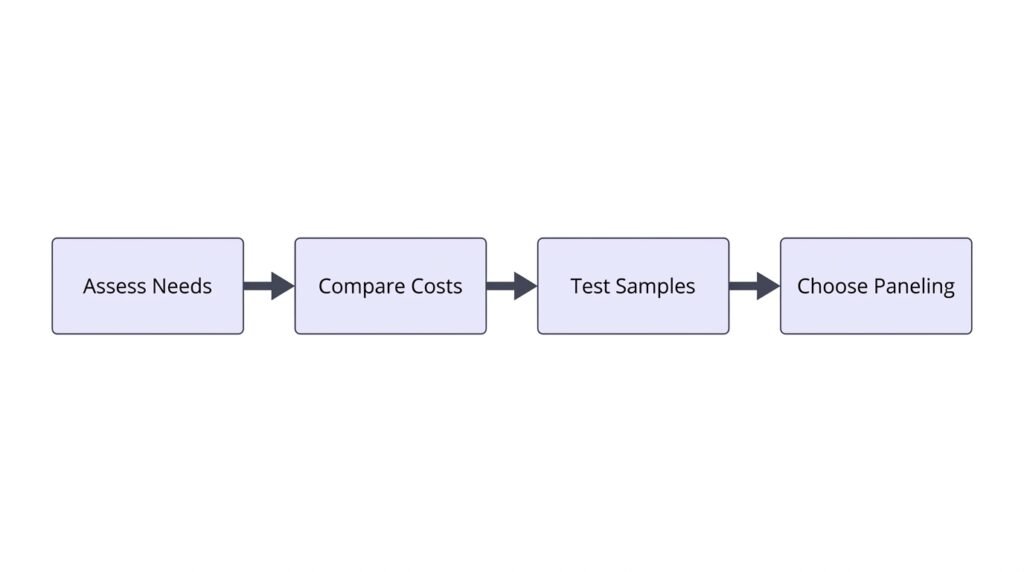
For both styles, prep work like removing trim and leveling is crucial. Finishing steps include filling nail holes, caulking seams, sanding, priming and painting. Board and batten is generally more labor-intensive than beadboard, so consider hiring a professional if you’re inexperienced. See the decision timeline below for an overview of choosing and planning the installation:
Cost Comparison of Beadboard vs Board and Batten
Costs vary widely by material (MDF, wood, PVC) and installation. Use the table below as a general guide:
- Beadboard: Material costs are roughly $0.50–$3 per sq ft. When installing (DIY or contractor), expect about $10–$20 per sq ft all-in.
- Board and Batten: Material runs about $1–$4 per sq ft, with total installed cost around $10–$23 per sq ft due to added labor.
These are ballpark estimates. Actual prices depend on region, material quality, and the complexity of the job. Always get multiple quotes or price out materials at home centers or lumber yards. For example, a 4×8 ft MDF beadboard sheet (32 sq ft) costs about $30 (~$0.94/sq ft), which aligns with the lower end of the range.
| Feature | Beadboard | Board and Batten |
|---|---|---|
| Materials | MDF, wood (pine/oak), PVC panels | Wood/MDF boards + trim boards (MDF, pine) |
| Look/Style | Narrow vertical grooves (casual, cottage, coastal) | Wide boards and battens (modern farmhouse, Craftsman) |
| Installation Difficulty | Moderate – moderate cuts, panel fitting, nailing | High – precise cuts, many pieces, more finishing (caulk, sand) |
| Cost (est. material) | Low: ~$0.50–$3/sq ft | Moderate: ~$1–$4/sq ft |
| Durability | Fair – surface protection; wood/MDF can dent; PVC versions are more water-resistant | High – thick boards protect walls; trims solidly attached |
| Maintenance | Easy wipe-down; painted MDF is washable; grooves may collect some dust | Similar care; more edges/corners so more dusting; can wash painted surfaces |
| Best Rooms/Uses | Bathrooms, kitchens, mudrooms, laundry, nurseries (lower walls, accents) | Living/dining rooms, bedrooms, hallways (full wall or accent); works as exterior siding too |
Maintenance and Care
Both beadboard vs board and batten are low-maintenance compared to wallpaper or raw drywall. Surfaces are typically painted in semi-gloss or satin paint, which makes wiping away spills or stains easy. For regular upkeep, simply dust or vacuum any grooves or trim edges. Use a damp microfiber cloth to clean marks.
- Painted MDF/Wood: Clean with a mild soap solution and soft cloth. Avoid saturating with water (especially on the joints). Touch up chips or cracks with primer and paint.
- PVC Beadboard Option: If moisture is a concern, PVC beadboard (often used in bathrooms) is highly water-resistant and only needs regular dusting.
- Avoid Gouges: Furniture or pet nails can dent painted paneling, so consider using a higher-quality wood (like oak) or protective chair-rail trim in high-traffic areas.
- Dusting: Board and batten’s multiple trim edges might need more attention; keep a vacuum brush or duster handy.
In general, neither style requires special products—avoid abrasive cleaners that can wear paint. Address any caulk gaps annually (especially in humid rooms) to prevent moisture intrusion. When properly sealed and painted, both beadboard and board-and-batten walls can last decades without heavy maintenance.
Style and Room Suitability
Beadboard: This style is synonymous with cottage, farmhouse, or coastal interiors. It’s often used on the lower third to half of walls (wainscoting height) in dining rooms and hallways, or on all walls in baths and kitchens for a “cabinetry” effect. Beadboard can also cover ceilings (classic in beach houses). Bright white or pastels on beadboard create a light, airy feel. It’s ideal if you want a traditional or shabby-chic vibe.
Board and Batten: Fits well in farmhouse, Craftsman, transitional, or industrial-style homes. The strong vertical lines add height and drama, so it’s popular as a floor-to-ceiling treatment on an accent wall (e.g., behind a bed or sofa) or even all walls in a room. It works in entryways, living rooms, or stairwells. Darker paint colors or contrasting battens can make it more contemporary. Board and batten also translates outdoors (exterior siding), so using it inside can give a unified look between inside and out.
Matching to Room Needs: If your home has modern clean lines or industrial touches, board and batten often complements that aesthetic. If your home is historic, cottagey, or French country, beadboard will feel more natural. For moisture-prone areas (bath, laundry), beadboard (especially PVC) is proven. For open/contemporary spaces, a dramatic board and batten wall can be a focal point.
Decision Checklist for Beadboard vs Board and Batten
- Style Fit: Does your decor lean casual/coastal (beadboard) or modern/farmhouse (board & batten)?
- Room Function: Is the room small or humid? Beadboard (especially PVC) handles splashes well. For large living spaces or hallways, board and batten makes a grand statement.
- DIY Skill & Time: Be honest about your skills. If you have basic carpentry tools, installing beadboard panels is easier. Board and batten requires more measuring and finishing.
- Budget: Compare material+labor estimates. Beadboard typically has lower material costs. Board and batten can be low-end (MDF) or high-end (solid wood battens), so decide upfront.
- Wall Condition: Smooth walls are best for board and batten; beadboard can hide some wall imperfections due to its grooves.
- Future Plans: Board and batten is less reversible (lots of trimming). If you rent or plan to remove it, beadboard sheet panels might be peeled off more cleanly.
- Sample First: Consider buying a sample panel of each style or painting a small test section of wall to see the effect in your space.
Final Recommendation
Both options are beautiful choices for adding character and value to your home. If you love a cozy, vintage or beachy look, beadboard is likely the winner. It’s cost-effective and fits well in bathrooms, kitchens, mudrooms, or even as a backsplash. If you prefer a bold, clean-lined aesthetic, board and batten will better match modern farmhouse or Craftsman decor. It’s particularly striking as an accent wall in a living room, entry hall, or bedroom.
For the best of beadboard vs board and batten, some homes use beadboard up to a chair rail and board-and-batten above, or vice versa. Whatever you choose, hire a skilled installer if the project seems daunting. When done right, either paneling style will give your room texture, protection, and an upscale feel.